
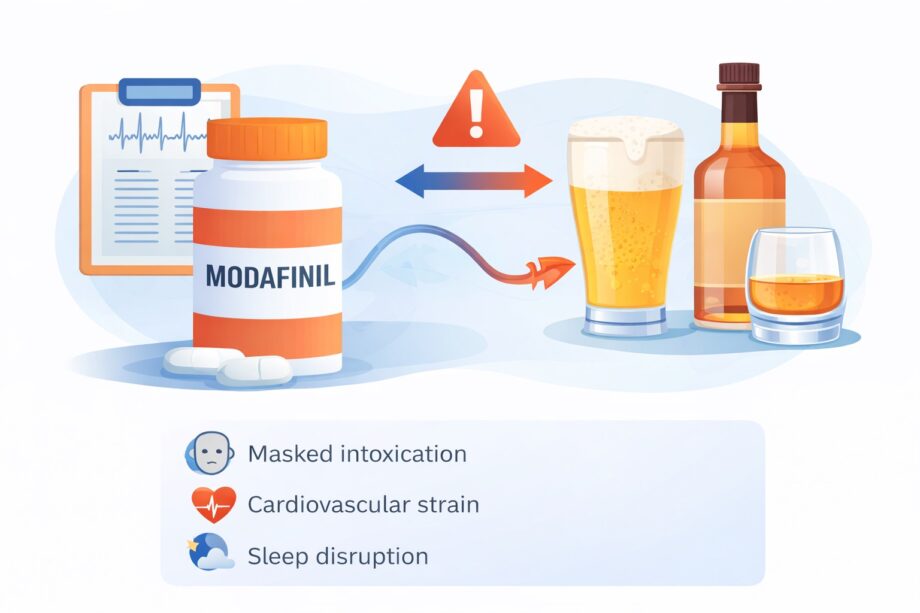
Modafinil is widely prescribed to improve wakefulness in conditions like narcolepsy and shift work sleep disorder. Alcohol, meanwhile, is one of the most commonly consumed psychoactive substances worldwide.
But what happens when the two are combined?
Patients frequently ask this question in clinical consultations. The answer is nuanced — and sometimes misunderstood.
What Is Modafinil?
Modafinil is a wakefulness-promoting agent (a eugeroic), not a traditional stimulant. It works by influencing multiple neurotransmitter systems, including dopamine, orexin (hypocretin), and histamine pathways in the brain.
According to the official FDA prescribing label (Provigil/modafinil), modafinil increases extracellular dopamine by inhibiting dopamine reuptake:
FDA Label (Section 12 – Clinical Pharmacology):
https://www.accessdata.fda.gov/drugsatfda_docs/label/2015/020717s037s038lbl.pdf
In the UK, modafinil is a Prescription Only Medicine (POM). For broader regulatory context, see:
Modafinil in the UK
How Alcohol Affects the Brain
Alcohol is a central nervous system depressant. It enhances GABA activity and inhibits glutamate transmission, leading to:
- Reduced inhibition
- Impaired judgment
- Slowed reaction time
- Sedation at higher doses
The UK NHS explains alcohol’s systemic effects here:
https://www.nhs.uk/live-well/alcohol-advice/the-risks-of-drinking-too-much/
When you combine a wakefulness-promoting medication with a sedative substance, the interaction becomes complex.
Does Modafinil Interact with Alcohol?
Official Guidance
The FDA label states that alcohol’s interaction with modafinil has not been fully studied and recommends caution.
This lack of definitive data does not mean the combination is safe. It means controlled trials are limited.
In clinical settings, physicians often advise patients to avoid alcohol while initiating modafinil therapy. This allows clearer monitoring of side effects such as:
- Insomnia
- Anxiety
- Headache
- Cardiovascular changes
Why the Combination Can Be Risky
1. Masked Intoxication
Modafinil promotes alertness. Alcohol impairs cognition.
When taken together, modafinil may mask subjective feelings of intoxication, leading individuals to drink more than intended. However, blood alcohol levels remain unchanged.
This mismatch between perceived sobriety and actual impairment increases the risk of:
- Accidents
- Poor decision-making
- Overconsumption
In observational clinical contexts, this “false sobriety” effect is one of the most common concerns.
2. Cardiovascular Strain
Both substances influence heart rate and blood pressure.
Modafinil may increase sympathetic tone in some individuals. Alcohol can cause vasodilation initially but later stress the cardiovascular system.
For patients with hypertension or arrhythmias, combining them may increase risk.
3. Sleep Disruption
Ironically, combining modafinil and alcohol can worsen sleep quality.
Alcohol may help induce sleep initially but fragments REM cycles. Modafinil, depending on timing, may delay sleep onset.
For patients treated for narcolepsy or shift work disorder, this combination can undermine treatment goals.
The American Academy of Sleep Medicine discusses alcohol’s negative impact on sleep architecture here:
https://sleepeducation.org/healthy-sleep/alcohol-and-sleep/
Is It Dangerous?
The risk level depends on:
| Factor | Risk Impact |
|---|---|
| Alcohol quantity | Higher intake increases danger |
| Timing of doses | Same-day overlap raises concern |
| Cardiovascular history | Pre-existing issues increase risk |
| Psychiatric history | Anxiety may worsen |
There is no strong evidence of a severe toxic interaction at moderate levels, but absence of evidence is not evidence of safety.
Clinical Scenarios
Scenario 1: Occasional Social Drinking
A stable patient on 100 mg daily modafinil, without cardiovascular disease, consuming one standard alcoholic drink occasionally — risk is likely low but not zero.
Medical advice typically:
- Avoid drinking during early dose titration
- Monitor sleep and side effects
- Avoid binge drinking
Scenario 2: Heavy Weekend Drinking
Higher risk due to:
- Masked intoxication
- Increased dehydration
- Poor sleep recovery
In clinical practice, physicians often recommend avoiding alcohol entirely if excessive daytime sleepiness is severe.
IsModafinil Used to Treat Alcohol Dependence?
Interestingly, some research has explored modafinil for alcohol use disorder, particularly in patients with executive dysfunction.
A review in Neuropsychopharmacology discusses cognitive enhancers in substance use disorders:
https://www.nature.com/articles/npp2016260
However, this is experimental and not standard UK practice.
Key Safety Recommendations
If you are prescribed modafinil:
- Avoid alcohol during the first 1–2 weeks
- Do not use modafinil to “stay awake and drink longer”
- Stay hydrated
- Monitor heart rate and anxiety symptoms
- Discuss patterns honestly with your clinician
Alternatives to Consider
If fatigue persists and alcohol use is frequent, clinicians may assess underlying causes such as:
- Depression (sometimes treated with Bupropion)
- ADHD (sometimes treated with Atomoxetine)
- Sleep hygiene problems
Addressing root causes is safer than compensating with stimulatory agents.
Bottom Line: Should You Mix Modafinil and Alcohol?
From a medical standpoint, the safest recommendation is to avoid combining them, especially during dose initiation or in individuals with cardiovascular or psychiatric risk factors.
Occasional light drinking may not produce severe reactions in healthy individuals, but:
- It may blunt treatment effectiveness
- It may increase risky behaviour
- It may impair sleep quality
When in doubt, consult your prescribing clinician.
Medical Disclaimer
This article is informational only and does not replace professional medical advice. Always consult a licensed healthcare provider before combining medications with alcohol.
