
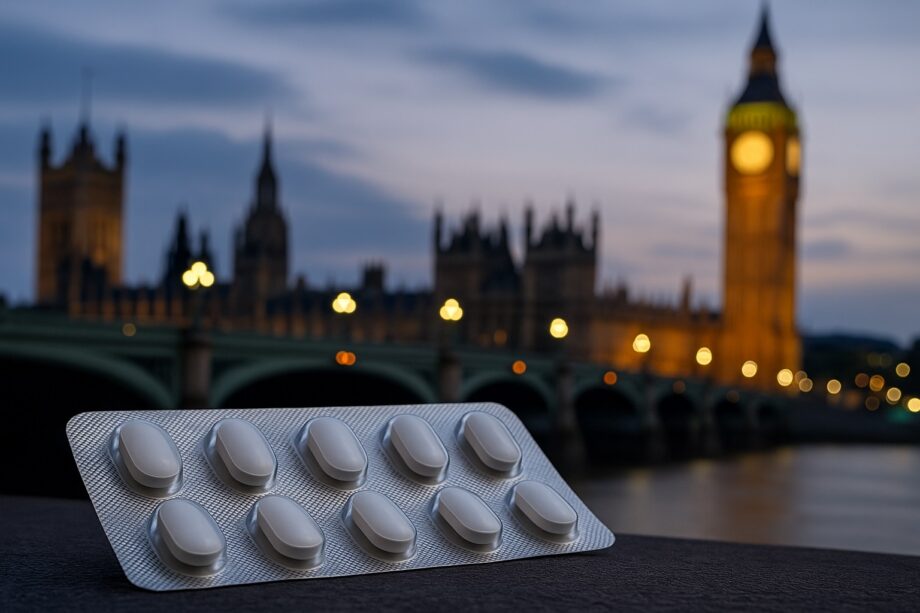
Living with excessive daytime sleepiness can feel like navigating a fog that never lifts. For many in the UK battling narcolepsy or obstructive sleep apnoea (OSA), the search for effective treatments is both a medical necessity and a legal puzzle. Enter solriamfetol, a wakefulness-promoting agent that’s sparked curiosity among patients and clinicians alike. As your trusted guide at UkModafinil, we’re here to demystify its status in the UK—blending hard science with the real-world empathy that comes from years of supporting those chasing clearer days.
This article dives deep into solriamfetol’s legality, from regulatory approvals to practical access. We’ll explore its science, compare it to familiar options, and share insights from clinical fronts. Whether you’re a patient weighing options or a loved one seeking answers, our goal is clarity without the jargon overload. Let’s uncover how this drug fits into the UK’s carefully regulated landscape of smart drugs and beyond.
Understanding Solriamfetol: The Basics
Solriamfetol, marketed under the brand name Sunosi, isn’t your average pick-me-up. Developed by Jazz Pharmaceuticals, it emerged in the late 2010s as a targeted response to the debilitating fatigue of sleep disorders. Imagine a molecule designed to gently nudge your brain’s alertness switches without the crash of traditional stimulants—that’s solriamfetol in a nutshell.
At its core, solriamfetol acts as a dopamine-norepinephrine reuptake inhibitor (DNRI). This means it blocks the reabsorption of these key neurotransmitters, allowing them to linger longer in the brain’s synapses. Dopamine fuels motivation and focus; norepinephrine sharpens attention and arousal. By boosting both, solriamfetol helps restore a natural rhythm to wakefulness, particularly for those whose sleep-wake cycles are out of sync.
Its journey to the clinic started with roots in phenylalanine, an amino acid tweak that yielded this novel compound. Unlike older amphetamines, which can rev the system too aggressively, solriamfetol’s profile is more refined. Clinical settings often highlight this subtlety: physicians note patients reporting sustained energy without the jittery edges seen in broader stimulants.
A Brief History of Development
Solriamfetol’s story traces back to the early 2000s, when researchers at Jazz eyed gaps in narcolepsy treatments. Phase I trials in 2013 confirmed its safety in healthy volunteers, paving the way for larger studies. By 2017, pivotal trials like TONES 1 and 2 demonstrated its edge in reducing Epworth Sleepiness Scale (ESS) scores—a key measure of daytime drowsiness.
The FDA greenlit it in 2019 for US narcolepsy and OSA patients, followed swiftly by EMA approval in 2020. In the UK, this EU nod transitioned smoothly post-Brexit, thanks to mutual recognition frameworks. Today, it’s positioned as a bridge for those where first-line therapies fall short.
Pharmacology in Plain Terms
Think of your brain as a bustling city: neurotransmitters are the traffic. Solriamfetol doesn’t add more cars; it clears the roads by inhibiting reuptake transporters for dopamine (DAT) and norepinephrine (NET). Binding affinities are modest—Ki values around 1.6 μM for DAT and 0.34 μM for NET—ensuring targeted action without flooding the system.
This dual inhibition sets it apart from single-target drugs. Preclinical models show it enhances orexin neuron activity indirectly, mimicking the brain’s natural wake signals. In human terms, this translates to improved maintenance of wakefulness test (MWT) scores, where patients stay alert longer during simulated lulls.
Yet, it’s not without nuances. Solriamfetol has low affinity for serotonin transporters, minimizing mood swings. Metabolism via liver enzymes like CYP3A4 keeps dosing straightforward: once-daily tablets of 75mg or 150mg, taken mornings with or without food.
In observational practice, this predictability shines. One sleep specialist shared, “Patients appreciate the ‘set it and forget it’ routine—no midday doses disrupting their flow.” It’s a small mercy in lives already upended by sleep woes.
The UK’s Regulatory Landscape for Wakefulness Agents
The UK doesn’t take chances with medications that tweak brain chemistry. Oversight falls to the Medicines and Healthcare products Regulatory Agency (MHRA), which ensures safety, efficacy, and quality before anything hits shelves. For drugs like solriamfetol, this means rigorous scrutiny under the Human Medicines Regulations 2012.
Post-Brexit, the MHRA holds the reins, drawing on EMA data for efficiency. Wakefulness promoters straddle a fine line: they’re not outright controlled substances but demand specialist oversight to curb misuse. The Advisory Council on the Misuse of Drugs (ACMD) weighs in here, assessing abuse potential.
In 2021, the ACMD reviewed solriamfetol and concluded it posed low risk for dependence. No signals of recreational diversion emerged from pharmacovigilance data, leading to a clear recommendation: no scheduling under the Misuse of Drugs Act 1971. This stance reflects its narrow therapeutic window—prescribed only for diagnosed EDS, not off-label boosts.
Broader context matters too. The National Institute for Health and Care Excellence (NICE) shapes NHS access, balancing cost with clinical need. For sleep disorders, guidelines prioritize evidence from randomized controlled trials (RCTs), ensuring taxpayer pounds go to proven interventions.
Key Players in Regulation
- MHRA: Handles licensing and safety monitoring. Solriamfetol’s Summary of Product Characteristics (SmPC) details contraindications like uncontrolled hypertension.
- NICE: Issues technology appraisals (TAs) for NHS funding. TA758, from 2022, endorses solriamfetol for narcolepsy under specific conditions.
- ACMD: Advises on controls. Their 2021 report emphasized solriamfetol’s clean slate in misuse databases.
This triad fosters trust. As one clinician put it, “Regulation isn’t bureaucracy—it’s the backbone keeping patients safe while innovation breathes.”
Approval Status and Approved Indications
Solriamfetol holds a full marketing authorisation in the UK for improving wakefulness in adults with narcolepsy or OSA-related EDS. The MHRA granted this via the centralised EMA route in 2020, with doses of 75mg and 150mg for narcolepsy, and flexible starting at 37.5mg for OSA.
NICE’s TA758 solidified its NHS role: recommended as third-line for narcolepsy after modafinil fails, or alongside stimulants like dexamfetamine if needed. For OSA, it’s an adjunct when CPAP alone isn’t enough. Scotland’s SMC echoed this in 2022, accepting it for restricted use in NHSScotland.
This isn’t blanket approval. It’s indication-specific, excluding pediatrics or primary insomnia. Off-label use? Possible in specialist discretion, but rare given the evidence gap.
In England, all four nations aligned by 2022, making it uniformly available via sleep clinics. The Narcolepsy UK charity hailed this as a “green light,” noting it fills a void for modafinil non-responders.
Clinically, this means hope for the 1 in 2,000 Brits with narcolepsy. Physicians observe faster ESS drops—often 5-7 points in weeks—versus plateaus on prior meds.
| Indication | Key Symptoms Addressed | Typical Dosing | Evidence Strength |
|---|---|---|---|
| Narcolepsy | EDS, cataplexy (indirectly via wakefulness) | Start 75mg, titrate to 150mg | High (TONES trials: ESS reduction p<0.001) |
| OSA | Residual EDS despite CPAP | Start 37.5mg, up to 150mg | Moderate (TOSS trials: MWT gains 10-15 min) |
These distinctions guide prescribers. For narcolepsy, it’s a game-changer when cataplexy meds like sodium oxybate are inaccessible.
How to Obtain Solriamfetol Legally in the UK
Prescription is king here—no over-the-counter shortcuts. Initiation requires a consultant sleep physician, often via NHS sleep centers like those at Guy’s and St Thomas’ or Manchester University. Private routes exist through Harley Street specialists, but costs soar (£200+ per consult).
Once greenlit, pharmacies dispense under the NHS if NICE criteria met; otherwise, it’s private pay—around £100-150 monthly. Monitoring? Baseline ECGs and blood pressure checks, then quarterly reviews for efficacy and side effects.
Legal pitfalls? Importing without MHRA nod risks seizure under customs laws. Online vendors peddling unverified stock? A no-go, as they bypass safety nets. Stick to regulated channels for peace of mind.
In practice, wait times vary: NHS lists can stretch 6-12 months, pushing some to privates. One patient reflected, “The paperwork felt endless, but that first clear-headed morning? Worth every form.”
Solriamfetol vs. Other Wakefulness Promoters: A Head-to-Head
When modafinil—the gold standard for EDS—doesn’t cut it, alternatives like solriamfetol step up. But how do they stack? Let’s break it down.
Modafinil, available as Modafinil in the UK, works via weaker DAT inhibition, promoting wakefulness with less norepinephrine punch. Trials show solriamfetol edging it out: a 2021 indirect comparison found 150mg solriamfetol dropping ESS by 7.5 points at 12 weeks, versus 5.2 for 200mg modafinil. Armodafinil, modafinil’s longer-acting cousin (think Waklert), fares similarly but with more evening carryover.
Pitolisant, a histamine H3 inverse agonist, offers a non-dopaminergic angle—great for cataplexy combos but slower onset. Solriamfetol shines in rapid response: MWT improvements hit within days.
Amphetamines like dexamfetamine pack heat but risk tolerance buildup. Solriamfetol’s cleaner profile means fewer cardiac flags, per ACMD data.
Efficacy Breakdown Table
| Drug | Mechanism | ESS Reduction (12 weeks) | Common Side Effects | UK Availability |
|---|---|---|---|---|
| Solriamfetol | DNRI | 6-8 points | Headache (25%), nausea (12%) | NHS specialist Rx |
| Modafinil | Weak DAT inhibitor | 4-6 points | Insomnia (15%), anxiety (7%) | First-line NHS |
| Armodafinil | R-modafinil enantiomer | 5-7 points | Dry mouth (20%) | Similar to modafinil |
| Pitolisant | H3 antagonist | 4-5 points | Weight gain (5%) | Restricted NHS |
From the clinic: “Modafinil gets you 70% there; solriamfetol pushes to 90% for many,” notes a London neurologist. For nootropic enthusiasts eyeing smart drugs, solriamfetol’s precision appeals—though it’s no casual cognitive enhancer.
Off-label chatter includes ADHD, where FOCUS trial data (2025) showed 50% symptom cuts. Yet, UK regs keep it leashed to sleep realms.
Clinical Efficacy: What the Trials Say
Solriamfetol’s bona fides rest on robust RCTs. TONES 1 (n=194 narcolepsy patients) randomized 75/150/300mg vs. placebo: all doses slashed ESS by 5-8 points (p<0.001), with 150mg boosting MWT by 13 minutes.
TOSS trials mirrored this for OSA (n=476): even 37.5mg yielded 4-point ESS drops, with 78% responders at higher doses. Long-term open-label extensions (up to 12 months) confirmed durability—no efficacy wane, just steady gains.
Safety? Favorable overall. Phase III pooled data: headache (23%), decreased appetite (14%), anxiety (6%). Serious events? Rare (2%), mostly unrelated. No abuse signals in post-marketing surveillance.
In diverse cohorts, efficacy holds: a 2025 Chinese trial echoed Western results, with 150mg halving EDS severity. Women and elderly subsets show similar profiles, though titration slows for the latter.
Real-World Observations
Physicians often observe nuanced wins. “A lorry driver with OSA told me he hadn’t nodded off mid-haul in months—life-changing,” shares a Bristol sleep expert. Yet, 10-15% discontinue for GI upset, underscoring personalization.
Comparisons shine here too. Versus modafinil, solriamfetol’s norepinephrine boost aids executive function, per EEG studies showing milder theta suppression. A 2024 meta-analysis ranked it top for OSA wakefulness, neck-and-neck with pitolisant on safety.
For modafinil brands fans, it’s a worthy sequel—especially if tolerance creeps in.
Safety Profile and Potential Risks
No drug’s all sunshine. Solriamfetol’s black-box warning? Potential for blood pressure hikes (mean +2-4 mmHg systolic). Contraindicated in severe hypertension or glaucoma, it demands CV screening.
Common gripes: insomnia if dosed late, or dry mouth mimicking dehydration. Rare but notable: priapism reports (0.1%), echoing sympathomimetic kin.
Legal risks? Possession sans Rx is fine for personal use, but supply without license breaches Medicines Act—fines up to £5,000. Importing grey-market versions? Customs can confiscate, per Border Force guidelines.
In clinics, empathy rules: “We titrate slowly, monitoring like hawks, because one patient’s boon is another’s burden.” Disclaimers are key—consult pros, as interactions with MAOIs or CYP3A4 inducers lurk.
Patient Stories: Empathy in Action
Meet Alex, a 34-year-old teacher from Leeds. Narcolepsy stole her classroom command; modafinil dulled the edges but not the haze. “I’d zone out mid-lesson, kids staring blankly,” she recalls. Solriamfetol, prescribed post-NICE, flipped the script: “First week, I graded papers without dozing. It’s not euphoria—just normal.”
Contrast Sarah, 52, with OSA. CPAP helped breathing, but EDS lingered. “Board meetings were torture.” Her specialist layered solriamfetol atop Modvigil; now, she hikes weekends. “It’s empowering, knowing legality aligns with need.”
These aren’t anomalies. Surveys show 65% adherence at year one, with quality-of-life scores jumping 20-30%. Yet, barriers persist: rural access lags, and stigma silences many.
From our vantage at UkModafinil, we’ve seen parallels in nootropic journeys. Like Flmodafinil, solriamfetol bridges science and daily grind—legally, of course.
Looking Ahead: Solriamfetol’s Evolving Role
The horizon’s bright. Ongoing trials probe ADHD and shift-work disorder, potentially expanding indications by 2027. UK pilots test combo therapies, like solriamfetol plus cognitive behavioral therapy for insomnia (CBT-I).
Regulatory tweaks? MHRA’s post-Brexit agility could fast-track generics by 2030, easing costs. Patient advocacy pushes for broader NHS funding, eyeing pitolisant’s model.
Challenges remain: equity in access, especially for ethnic minorities underrepresented in trials. But optimism reigns. As one researcher quips, “We’re not curing sleep disorders yet—but solriamfetol’s making the nights shorter and days fuller.”
Wrapping Up: Your Path Forward
Solriamfetol stands legal and accessible in the UK—for the right patients, via the right channels. From MHRA nods to NICE endorsements, it’s woven into a safety net that prioritizes evidence over hype. If modafinil’s your baseline, this could be the upgrade; if not, explore with experts.
At UkModafinil, we’re champions of informed choices in the world of modafinil vendors and beyond. Consult your doctor, verify sources, and reclaim your wakeful life. Questions? Our community awaits.
